
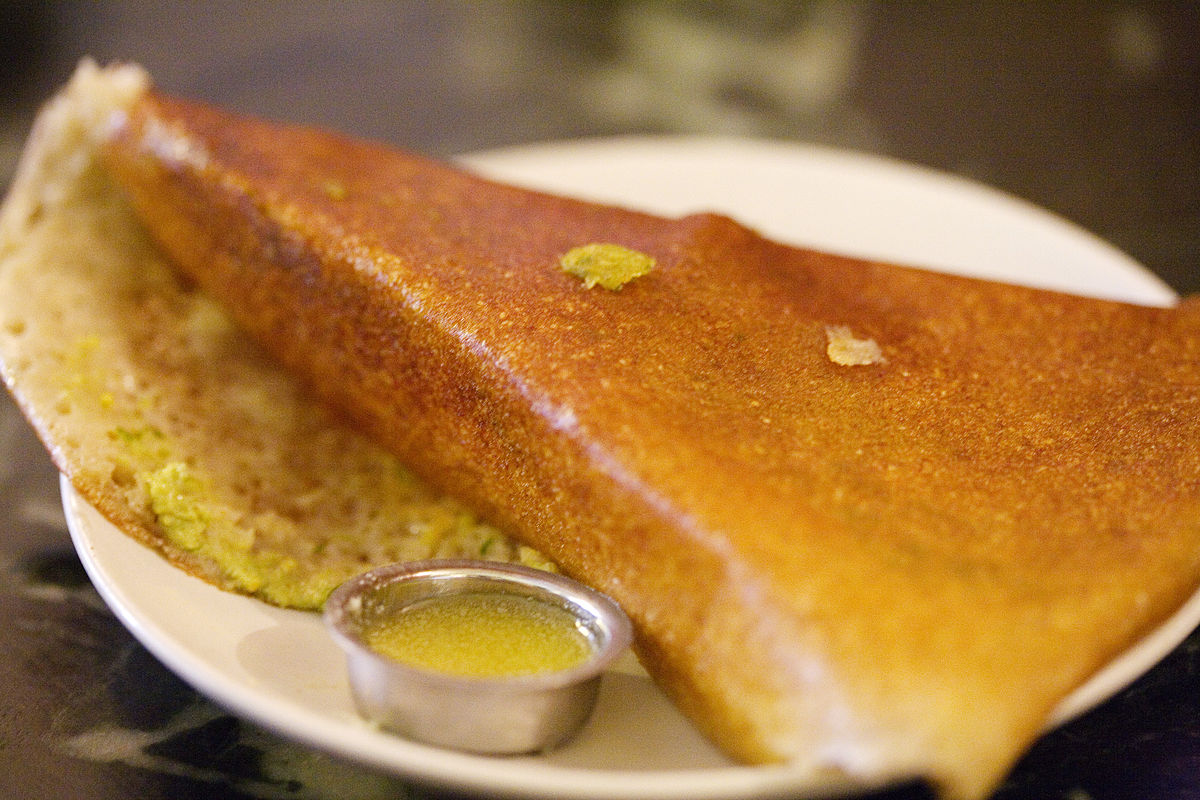
Flatbread may be one of the most familiar foods in the world, but it is also one of the easiest to oversimplify.
A person who grows up eating corn tortillas may think of flatbread as something warm, flexible, and made to hold beans, vegetables, meat, cheese, or salsa. Someone else may picture naan blistered against the wall of a tandoor, pita opening into a pocket, lavash wrapped around herbs and cheese, chapati puffing on a hot pan, or injera spread across a shared platter. These breads do not come from one origin story, one technique, or one culture. They are connected by a broader idea: a useful piece of dough or batter shaped thin enough to cook quickly and strong enough to serve a meal.
That practical idea helps explain why flatbreads appear across so many food traditions. Before home ovens became common, many households cooked bread on stones, griddles, metal pans, clay oven walls, hot ashes, or domed cooking surfaces. A flat shape made sense. It used less fuel, cooked fast, and could be eaten fresh without elaborate equipment. It could scoop, wrap, line a plate, travel in a cloth, dry for storage, or become part of a ritual table.
This guide is not a ranking of “best” flatbreads. It is a careful way to understand why naan, pita, tortilla, roti, chapati, lavash, injera, yufka, and other flatbreads feel so different even when they share a simple shape.
Utility Box: A Quick Way to Read Any Flatbread
When you meet a flatbread, ask five questions:
| Question | Why it matters | |---|---| | What grain or flour is used? | Wheat, maize, teff, millet, barley, rice, or mixed flours behave differently. | | Is it leavened, unleavened, or fermented? | Yeast, sour fermentation, steam, or no leavening changes texture and flavor. | | How is it cooked? | A tandoor, griddle, clay oven, saj, comal, tawa, or pan creates different surfaces. | | What role does it play at the table? | Some flatbreads wrap food, some scoop sauces, some replace plates, and some mark ceremonies. | | Is it eaten fresh, dried, stuffed, layered, or reheated? | Storage and serving style are part of the tradition, not an afterthought. |
This five-part lens is the main tool used in this article. It helps compare flatbreads without forcing them into one narrow definition.
Who This Article Is / Is Not For
This article is for readers who want a trustworthy cultural and practical introduction to global flatbreads. It is useful for home cooks, food writers, culinary students, travelers, and curious readers who want to understand the difference between common breads without flattening their cultural meaning.
This article is not a medical nutrition guide, a strict recipe manual, or a ranking of which flatbread is more “authentic.” It also does not try to settle ownership disputes over foods shared across borders, migrations, languages, and family traditions. Flatbreads often belong to communities rather than to a single modern country.
Why Flatbread Is a Global Form, Not One Recipe
A typical loaf rises upward. Many flatbreads spread outward.
That difference sounds simple, but it changes nearly everything. Flatbread can be made from dough, batter, fresh masa, fermented grain paste, or enriched wheat dough. It can be soft, crisp, sour, chewy, flaky, layered, dry, spongy, pocketed, blistered, or smoky. Some flatbreads contain only flour, water, and salt. Others include yogurt, milk, oil, ghee, yeast, sourdough starter, or alkaline-treated maize.
Flatbreads also tell us something about everyday cooking technology. A high-domed oven is helpful for tall loaves, but flatbread can be cooked on surfaces available to many households: a heated stone, a clay wall, a metal griddle, a convex saj, a comal, a tawa, or a cast-iron pan. In many traditions, the person making bread does not simply “bake.” They press, slap, roll, stretch, turn, flip, stack, cover, steam, dry, or rehydrate.
Because of that variety, it is more useful to think of flatbread as a family of solutions. The problem is ancient: how do people turn grain into something portable, filling, and shareable? Each culture answers with its own grain, heat, rhythm, and table manners.
Archaeological research has pushed the story of bread very far back. A PNAS study on charred food remains from Shubayqa 1 in northeastern Jordan reported evidence of bread-like products made by Natufian hunter-gatherers about 14,400 years ago, before the spread of agriculture. That does not mean modern pita or naan existed then. It shows that some forms of grinding plant foods, mixing them with water, and cooking bread-like products are extraordinarily old.
The Flatbread Family Map
The following compact table is an original editorial map for comparing well-known flatbreads. It is not a scientific taxonomy. It is a reader-friendly way to see how grain, cooking surface, texture, and table use work together.
| Flatbread | Base | Cooking surface | Texture | Table role | |---|---|---|---|---| | Naan | Enriched wheat dough | Tandoor or hot pan | Soft, chewy, blistered | Scoops curries, stews, grilled foods | | Pita | Yeasted wheat dough | Very hot oven | Soft, sometimes pocketed | Holds fillings or scoops dips | | Tortilla | Nixtamalized maize masa or wheat dough | Comal or griddle | Flexible, thin, lightly toasted | Tacos, quesadillas, table bread | | Roti / Chapati | Whole wheat dough | Tawa or skillet | Soft, dry-cooked, sometimes puffed | Everyday bread for lentils, vegetables, curries | | Lavash | Thin wheat dough | Tonir-style oven or hot surface | Pliable fresh; crisp dried | Wraps, table bread, ceremonial use | | Yufka | Very thin wheat dough | Saj or griddle | Thin, flexible, often layered | Wraps, layered dishes, storage bread | | Injera | Fermented teff or grain batter | Wide griddle | Spongy, tangy, porous | Plate, utensil, and bread | | Arepa | Maize dough, often from precooked maize flour | Griddle, oven, or frying surface | Thicker, split or topped | Filled bread or meal base | | Msemen / Rghaif | Wheat dough with oil | Griddle | Layered, flaky, chewy | Breakfast, snacks, tea table | | Matzo | Flour and water, prepared under Passover rules | Oven | Crisp, unleavened | Passover food with religious significance |
The table shows why “flat” is only the beginning. Pita and tortilla may both hold fillings, but pita relies on a wheat dough that can inflate from steam, while a traditional corn tortilla depends on masa made from maize processed with alkali. Injera may look flat, but it behaves almost like a fermented edible sponge. Lavash may be soft when fresh and crisp when dried. Naan may be flat in outline but pillowy in bite.
A Simple Flatbread Texture Scale
Texture is often the easiest way for a reader to understand why two flatbreads that look similar can behave very differently at the table. The scale below is an original practical guide, not a scientific classification.
| Texture | Usually shaped by | Examples | |---|---|---| | Pocketed | High heat, steam, dough thickness | Pita | | Chewy-blistered | Intense wall heat or very hot pan contact | Naan, some lavash | | Flexible-thin | Pressed, rolled, or stretched; quickly surface-cooked | Tortilla, chapati, yufka | | Spongy-sour | Fermented batter and griddle cooking | Injera | | Flaky-layered | Folding, stretching, oil, or fat between layers | Msemen, rghaif, paratha-style breads | | Crisp-dry | Thin baking or intentional drying | Matzo, dried lavash |
This texture scale helps readers compare flatbreads by behavior rather than by name alone. A bread may belong to more than one row depending on region, recipe, age, and serving style.
Naan: Tandoor Heat and Enriched Softness
Naan is often the flatbread people outside South Asia recognize first, but it is only one part of a much larger bread culture. It is usually associated with wheat dough and tandoor cooking, though home versions are often made on pans or griddles. Compared with a plain roti, naan is commonly softer, thicker, and more enriched. Some recipes use yogurt, milk, ghee, butter, or yeast, depending on region and household style.
The tandoor matters. A hot clay oven does not cook naan like a flat skillet. The dough is slapped against the oven wall, where intense heat creates blistered spots, a lightly smoky surface, and a tender interior. That contrast is one reason naan works so well with saucy foods. It can tear into pieces, scoop, fold, and absorb without immediately falling apart.
Naan is sometimes treated in restaurants as a luxury bread, especially when brushed with butter or filled with garlic, cheese, herbs, or dried fruit. But it should not be used as a shortcut for all South Asian breads. India, Pakistan, Bangladesh, Nepal, Sri Lanka, and South Asian diasporas include many breads: roti, chapati, paratha, puri, kulcha, bhakri, appam, dosa, poee, sheermal, and more. Naan is famous, but fame is not the same as being the everyday bread everywhere.
A careful way to describe naan is this: it is a soft wheat flatbread strongly associated with tandoor baking and South Asian and neighboring Persianate food histories. It is not “just pita without a pocket,” and it is not a universal name for Indian bread.
Pita: Steam, Pocket, and the Logic of High Heat
Pita is often described as pocket bread, but not every pita opens perfectly, and some related breads are intentionally pocketless. The basic idea is a leavened wheat dough baked quickly at high heat. When the outside sets fast and moisture inside turns to steam, the two layers can separate and create a hollow center.
That pocket changed how many people use pita. It can hold falafel, grilled meats, chopped salad, eggs, fried vegetables, or spreads. It can also be torn and used with hummus, baba ghanoush, labneh, olive oil, or stews. Pita is part of a wider family of Middle Eastern and Mediterranean flatbreads, and names vary by language and place. Similar breads may be called Arabic bread, khubz, balady bread, shami bread, Lebanese bread, Syrian bread, or other regional names.
Pita’s strength is structural. A good pita is thin enough to fold but strong enough to hold moisture. It belongs to the table, the street stall, the lunchbox, and the bakery rack. Its pocket is not a gimmick; it is a natural result of dough, heat, timing, and steam.
One common mistake is to assume that pita’s pocket is the oldest part of the bread’s history. Flatbreads in the region are ancient, but the familiar pocketed form is better understood as one expression within a broader bread family. The safest wording is “pita-like flatbreads have deep regional roots,” not “modern pocket pita is unchanged from antiquity.”
Tortilla: Maize, Masa, and the Power of Nixtamalization
The tortilla is one of the clearest examples of how a flatbread can carry deep food knowledge in a small form. A traditional corn tortilla is not simply cornmeal mixed with water. It depends on nixtamalization: dried maize is cooked and steeped in an alkaline solution, often limewater, then washed and ground into masa.
This process changes the grain. It softens the maize, improves grinding, changes flavor and aroma, and makes the dough capable of forming a cohesive tortilla. Without this transformation, ground corn behaves very differently. The result is not only a bread but a food technology that shaped meals across Mesoamerica and continues to matter in Mexican and Central American cooking.
Corn tortillas are usually cooked on a comal or griddle. A good tortilla may puff, steam, brown in spots, and stay flexible enough to fold. It can become a taco, quesadilla, enchilada base, tostada, chip, chilaquiles component, or simply the bread at the side of a meal.
Wheat tortillas have their own history and regional importance, especially in northern Mexico and borderland cooking. They are usually made from wheat flour, water, fat, and salt, then rolled thin and cooked on a hot surface. They should not be treated as inferior substitutes for corn tortillas. They are part of different regional foodways.
The tortilla also teaches a larger lesson: flatbread is not always about wheat. Around the world, grains and starchy crops shape technique. Maize, teff, millet, sorghum, rice, cassava, and barley each require different handling. A flatbread tradition begins with what grows, what stores well, and what a community has learned to transform.
Roti and Chapati: Everyday Bread, Skillful Simplicity
Roti is a broad word in many South Asian and Caribbean contexts, while chapati is often used for a thinner whole wheat flatbread cooked on a tawa or skillet. The names can overlap, and usage changes by region, family, and language. That is why it is better to say “roti/chapati family” when writing for a global audience.
The ingredients may look simple: atta flour, water, sometimes salt or oil. The technique is not simple. The dough must be hydrated, rested, divided, rolled evenly, and cooked with enough heat to puff or soften without becoming brittle. A roti that balloons briefly over heat is not magic. Steam expands between layers created by rolling and cooking.
Roti and chapati show the dignity of everyday bread. They are often made fresh, one after another, and eaten with lentils, vegetables, pickles, yogurt, curries, or stews. Their value is not measured by dramatic toppings or rich fillings. Their value lies in rhythm: dough, roll, cook, stack, cover, serve.
Outside South Asia, roti has traveled widely through migration and labor histories. Caribbean roti, East African chapati, and Southeast Asian versions show how a flatbread can move, adapt, and become local in new places. A flatbread often carries migration history without needing a formal border story.
Lavash, Yufka, and the Thin Bread Traditions
Thin flatbreads such as lavash and yufka show another side of flatbread culture: preservation, sharing, and ceremony.
Lavash is especially important in Armenian food culture, and UNESCO has recognized Armenian lavash preparation as intangible cultural heritage. UNESCO has also recognized a multi-country flatbread making and sharing culture involving lavash, katyrma, jupka, and yufka across Azerbaijan, Iran, Kazakhstan, Kyrgyzstan, and Türkiye. These recognitions are a useful reminder that bread traditions can be both deeply local and shared across neighboring regions.
Fresh lavash can be soft and flexible, wrapped around herbs, cheese, grilled foods, or vegetables. Dried lavash can become crisp and later be softened with water. That ability to move between fresh and stored forms is part of its usefulness. In some communities, lavash is not only food but a symbol of hospitality, family labor, weddings, remembrance, and welcome.
Yufka is also thin and flexible, often cooked on a saj or griddle. It can be used as a wrap, layered in dishes, dried for storage, or softened again. These thin breads ask for rolling skill. The beauty is not height or decoration. The beauty is evenness, speed, and touch.
When writing about these breads, avoid treating them as interchangeable. Lavash, yufka, jupka, katyrma, markouk, laffa, and related breads each carry regional identities. They may resemble one another in form, but the names, occasions, flours, oven types, and meanings differ.
Injera: Flatbread as Plate, Utensil, and Fermented Foundation
Injera changes the flatbread conversation because it is usually made from batter rather than rolled dough. Associated with Ethiopian and Eritrean cuisines, injera is commonly made with fermented teff flour, though blends with other grains are also used depending on place, cost, and availability.
The surface is spongy and full of small holes often called “eyes.” Those holes are not decorative. They hold sauces. Injera may be spread across a platter, topped with stews, lentils, greens, vegetables, or meats, and then torn by hand to scoop the food. It is bread, plate, and utensil at once.
Fermentation gives injera its tangy flavor and soft structure. This makes it very different from a quick wheat flatbread. Its sourness is part of the meal’s balance, especially with rich stews and spiced sauces.
Injera reminds us that flatbread is not only about wrapping. It can organize the entire meal. The bread defines how people sit, share, tear, and eat from a common surface.
Arepa, Msemen, Matzo, and Other Borderline Cases
Some foods sit at the edge of the flatbread category, and that edge is worth noticing.
Arepas, common in Venezuelan and Colombian foodways, are made from maize dough, often from cooked or precooked maize flour in modern kitchens, and are usually thicker than tortillas. They may be split, filled, grilled, baked, or fried. They are not always “flatbread” in the same sense as lavash or roti, but they answer a similar question: how can ground grain become a hand-held meal base?
Msemen or rghaif, found in Moroccan and North African food traditions, is flat but layered and often enriched with oil or semolina. It is folded, stretched, and cooked on a griddle until chewy and flaky. It behaves less like a wrap and more like a layered bread for breakfast, tea, honey, butter, or savory fillings.
Matzo is an unleavened bread with religious significance in Jewish Passover practice. It should not be casually grouped with everyday flatbreads without acknowledging that role. Because Passover matzo is shaped by religious practice and community standards, a general food article should describe it carefully rather than treat it as only a culinary cracker. Its crisp, plain form carries ritual meaning as well as culinary function.
Focaccia is sometimes called a flatbread, but many versions are better understood as leavened oven breads with a more loaf-like crumb than thin griddle breads such as tortillas or chapatis. Pizza, manakish, lahmacun, and pissaladière also raise the question of when flatbread becomes a topped bread meal. These foods show that categories are useful, but real cuisines are more flexible than categories.
What NOT To Do / Common Mistakes
Do not call every South Asian bread “naan.” Naan is famous, but roti, chapati, paratha, puri, kulcha, dosa, appam, and other breads have their own techniques and meanings.
Do not assume flatbread means unleavened. Some flatbreads are unleavened, but many are leavened, fermented, or puffed by steam. Naan and pita often use yeast. Injera relies on fermentation. Roti and chapati may puff from steam even without yeast.
Do not call tortillas “wraps” as if the tortilla is secondary. In many meals, the tortilla is central. The filling does not automatically matter more than the bread.
Do not treat shared foods as belonging to only one modern border. Food traditions often predate current national boundaries and move through trade, migration, empire, marriage, labor, and diaspora.
Do not make health claims from the word “flatbread.” A flatbread can be simple or rich, whole grain or refined, small or large, fried or dry-cooked. Nutrition depends on ingredients, size, cooking fat, and the whole meal.
Do not use “authentic” carelessly. A village version, restaurant version, diaspora version, and home shortcut can all be real in different ways. Be specific instead: “tandoor-style,” “home skillet version,” “made with masa harina,” or “restaurant-style garlic naan.”
How to Taste Flatbread More Carefully
A useful tasting method is to examine five things before adding fillings or sauces.
First, look at the surface. Blisters suggest high heat. Brown spots on roti or tortilla show direct contact with a hot surface. Tiny holes in injera show fermentation and steam release. A shiny surface may come from brushing with fat.
Second, bend it. Does it fold without cracking? Does it spring back? Does it tear in long strips or short breaks? Flexibility tells you about hydration, gluten, fat, freshness, and cooking time.
Third, smell it. Wheat breads may smell toasted, buttery, smoky, tangy, or nutty. Corn tortillas may smell earthy and mineral because of masa and lime treatment. Fermented breads may smell sour or yeasty.
Fourth, eat a small piece plain. This is the fastest way to understand whether the bread is neutral, sour, salty, rich, smoky, or sweet. A flatbread that tastes plain with fillings may taste complex when eaten alone.
Fifth, test its job. Try it with sauce, dry fillings, grilled foods, or vegetables. Some breads are designed to absorb. Some are designed to hold. Some are designed to separate layers. Some are designed to disappear into the rhythm of the meal.
What This Article Does Not Claim
This article does not claim to list every flatbread in the world. That would be impossible in one guide.
It does not claim that the examples described here are the only “correct” versions. Flatbreads change by household, region, flour, weather, equipment, migration, and memory.
It does not provide medical, religious, or legal advice. When a bread has religious or ceremonial meaning, this article treats that meaning with respect and encourages readers to learn from reliable community sources.
It does not claim that one culture invented all flatbread. The broad practice of cooking thin grain-based foods is ancient and widespread, while named breads have their own histories.
FAQ
Is flatbread always unleavened?
No. Some flatbreads are unleavened, but many are leavened, fermented, or puffed by steam. Naan and pita often use yeast. Injera relies on fermentation. Roti and chapati may puff from steam even without yeast.
What is the difference between naan and pita?
Naan is commonly associated with enriched wheat dough and tandoor cooking, giving it a soft, chewy, blistered texture. Pita is usually a leaner wheat dough baked at high heat, sometimes forming a pocket. They may both be soft flatbreads, but their structure, cooking method, and table uses differ.
Is a tortilla a flatbread?
Yes, tortillas are commonly understood as flatbreads, but corn tortillas are technically and culturally distinct because they are traditionally made from nixtamalized maize masa. Wheat tortillas are also important, especially in northern Mexican and borderland traditions.
Why do some pitas form pockets?
A pita pocket forms when intense heat rapidly turns water inside the dough into steam. The steam pushes layers apart while the outside sets. If heat, dough thickness, or moisture are uneven, a pita may not fully pocket.
Is injera bread or a plate?
It is both in many Ethiopian and Eritrean meals. Injera is eaten as bread, but it also lines the platter and helps diners scoop stews, vegetables, and sauces.
Which flatbread is best for wraps?
It depends on the filling. Lavash, yufka, pita, tortillas, and some rotis can all work as wraps, but moisture matters. Wet fillings need a bread strong enough to hold sauce without tearing.
Are flatbreads healthier than loaf bread?
Not automatically. The word “flatbread” says little about nutrition. Ingredient list, portion size, cooking fat, and the whole meal matter more than shape.
Why do some flatbreads dry out so quickly?
Thin breads have a large surface area, so moisture escapes fast. Covering warm flatbreads in a towel, stacking them, or storing them properly can help preserve softness. Some breads, like lavash, may also be intentionally dried for storage.
Can I make traditional flatbreads without traditional equipment?
You can make respectful home versions, but equipment changes the result. A skillet naan will not taste exactly like tandoor naan, and a home griddle tortilla may differ from one made on a comal with fresh masa. It is better to say “home-style” than to claim exact replication.
Why do flatbread names overlap across countries?
Food names travel through language, trade, migration, conquest, and diaspora. Similar words may refer to different breads, and different words may describe similar techniques. Context matters.
How This Article Was Reviewed
This article was prepared with attention to cultural care, food terminology, and source quality. The editorial check focused on three questions:
- Does the article avoid claiming that one modern country owns every version of a shared bread tradition?
- Does it explain technical differences clearly without turning the guide into a recipe manual?
- Does it separate broad historical evidence from modern named breads?
Major factual points were checked against established references, including Encyclopaedia Britannica entries on common breads, FAO material on lime-treated maize and nixtamalization, UNESCO pages on lavash and shared flatbread culture, the PNAS study on early bread-like remains at Shubayqa 1, and Smithsonian writing on lavash and Armenian identity.
Why You Can Trust This Article
This guide is built around transparent comparison rather than romantic claims. It does not say “all flatbreads are the same,” and it does not use “ancient” as a shortcut for accuracy. It explains how flour, water, heat, fermentation, tools, and table use shape the bread.
The article also avoids recipe absolutism. Many flatbreads have household versions, street versions, ceremonial versions, bakery versions, and diaspora versions. Instead of declaring one version the only real one, the guide describes patterns readers can use with respect.
This article is credited to Jessica Miller, whose author profile helps readers find related food culture writing and understand the editorial focus behind Global Delight Food’s evergreen guides.
Most importantly, the article treats flatbread as living tradition. A flatbread is not only a food object; it can be a method, a memory, a tool, a wrapper, a plate, a sign of welcome, and sometimes a ritual object.
Source Notes and Further Reading
For broad definitions and individual bread entries, see Encyclopaedia Britannica’s pages on flatbread, naan, pita, tortilla, chapati, and injera.
For early bread-like remains, see the PNAS paper Archaeobotanical evidence reveals the origins of bread 14,400 years ago in northeastern Jordan. For maize processing, see FAO’s resources on lime-cooking and nixtamalization.
For lavash and shared flatbread heritage, see UNESCO’s pages on Lavash in Armenia and Flatbread making and sharing culture: Lavash, Katyrma, Jupka, Yufka. Smithsonian’s Tastes of Memory offers additional cultural context.
Final Takeaway
Flatbreads are not simple because they are flat. They are simple only on the surface.
Naan shows what tandoor heat and enriched dough can do. Pita shows how steam can create a pocket. Tortilla shows how maize becomes masa through nixtamalization. Roti and chapati show the skill inside daily repetition. Lavash and yufka show how thin bread can carry hospitality, storage, and ceremony. Injera shows how fermentation can turn flatbread into the center of a shared meal.
To understand flatbread is to understand one of the world’s most durable food ideas: grain transformed by hands, heat, and community into something that can hold a meal.